How to draw a panda
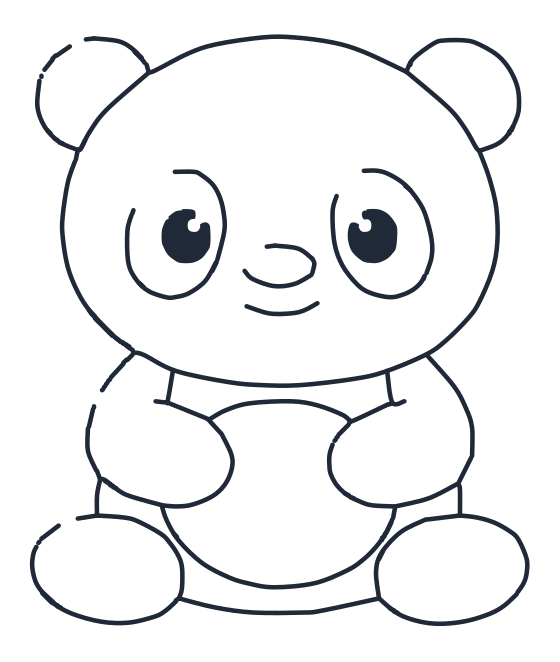
A sitting panda is two overlapping guide shapes, a big round head resting on a wide oval body. Everything that says panda gets added on top: the half circle ears, the two oval eye patches and the arms hugging the big belly.
- 9 steps
- 11 minutes
- 4-10 Ages
- Easy
How do you draw a panda?
Sketch two overlapping guide shapes, a big circle for the head and a wide oval under it for the body. Draw the big round head, add two half circle ears, then the two oval eye patches with the eyes, nose and smile. Draw the body and belly, wrap the arms around it and finish with two oval feet. Nine steps.
Watch it drawn, line by line
The whole drawing in under half a minute, in the same order as the steps below. No sound, so play it anywhere.
Draw it step by step
The new lines for each step are drawn in red. The grey dashed shapes are guides, sketch them lightly and rub them out at the end.
-
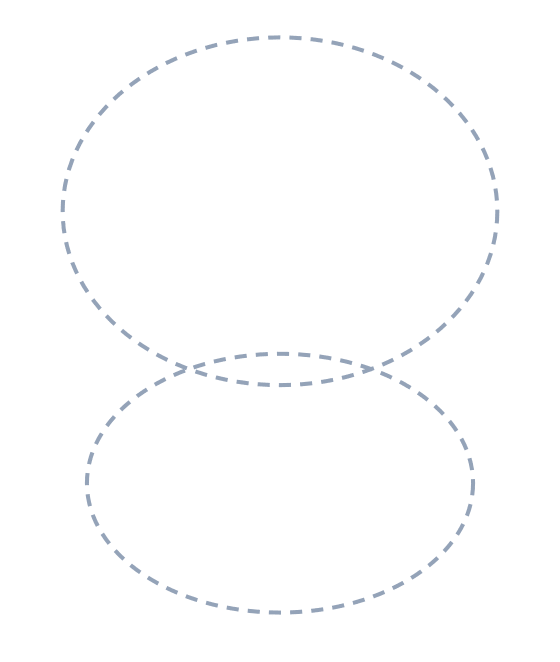
1 Step 1: Guide shapes
Lightly sketch a big circle for the head and a wide oval under it for the body, overlapping a little.
-
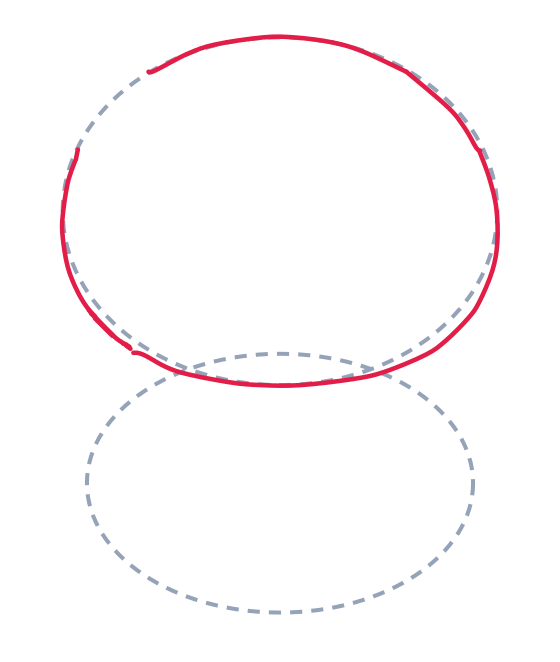
2 Step 2: Big head
Draw the head as one big rounded shape, following the top guide.
-
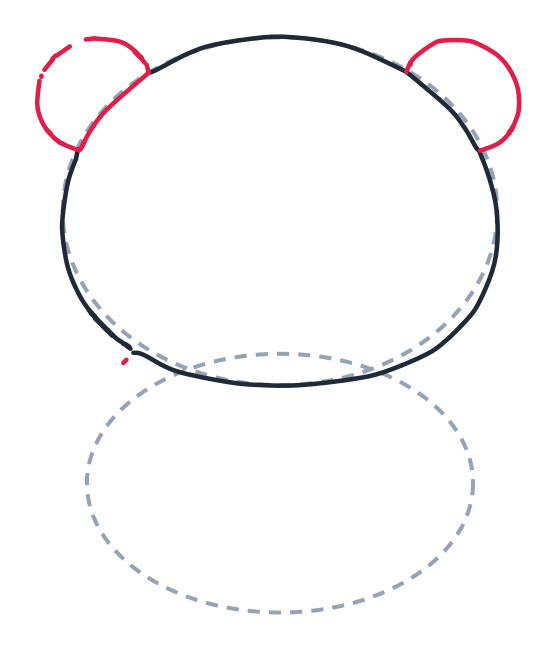
3 Step 3: Round ears
Add a half circle on each top side for the round ears.
-
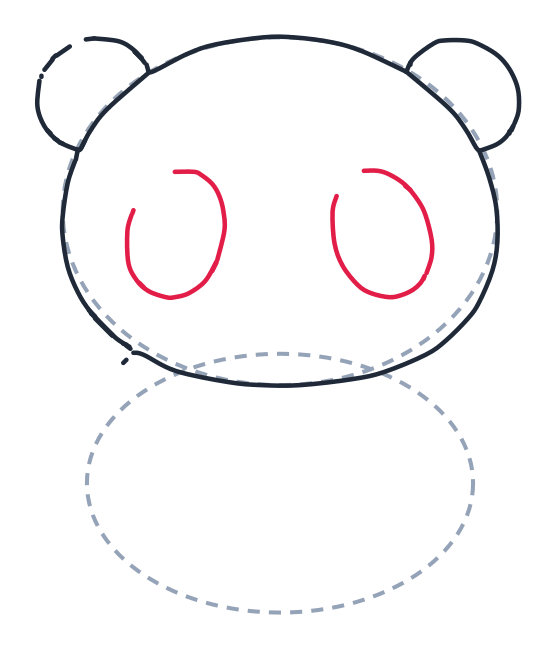
4 Step 4: Eye patches
Draw two big ovals for the eye patches, one on each side.
-
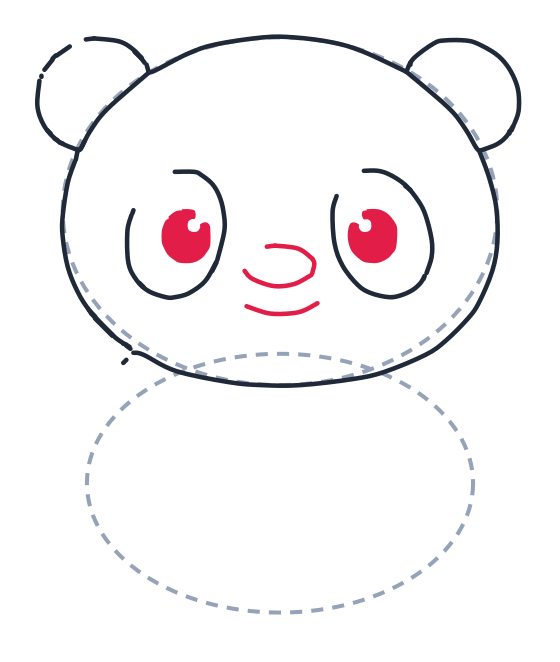
5 Step 5: Eyes and smile
Fill in a round eye inside each patch, leaving a little white shine. Add a small oval nose, a short curve under it and a smile below.
-
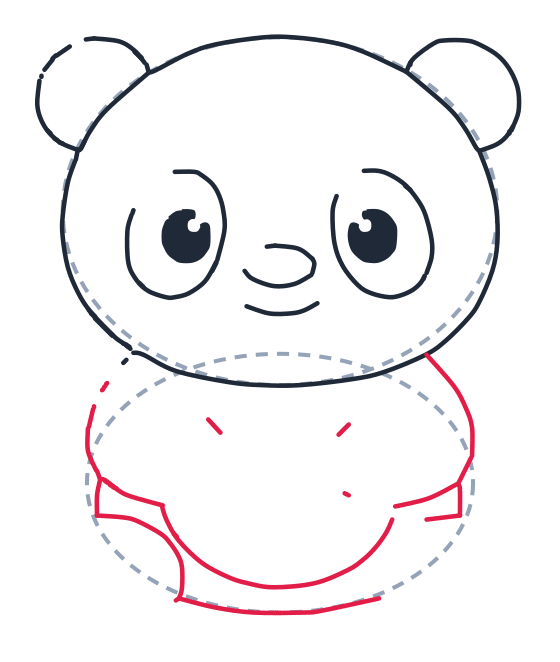
6 Step 6: Body and belly
Draw the body: a bumpy curve down each side and a big U shape in the middle for the belly.
-
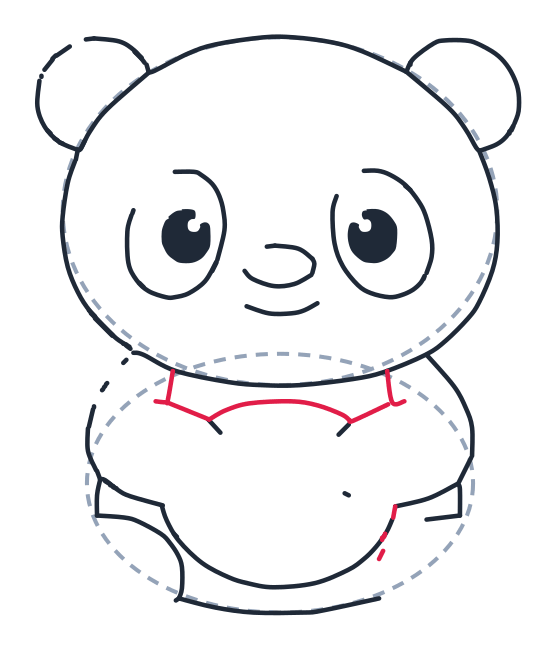
7 Step 7: Arms start
Add a curved line across the top of the belly and two short straight lines up for the arm starts.
-
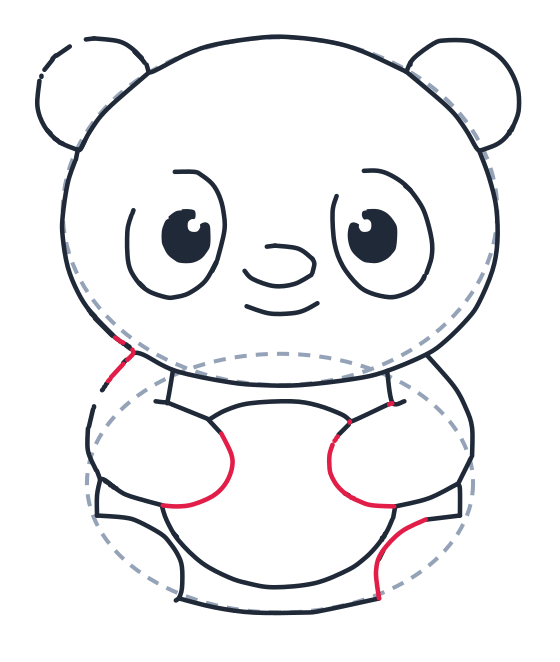
8 Step 8: Hugging paws
Draw two big C shapes on each side of the belly for the paws, plus small side curves on the body.
-
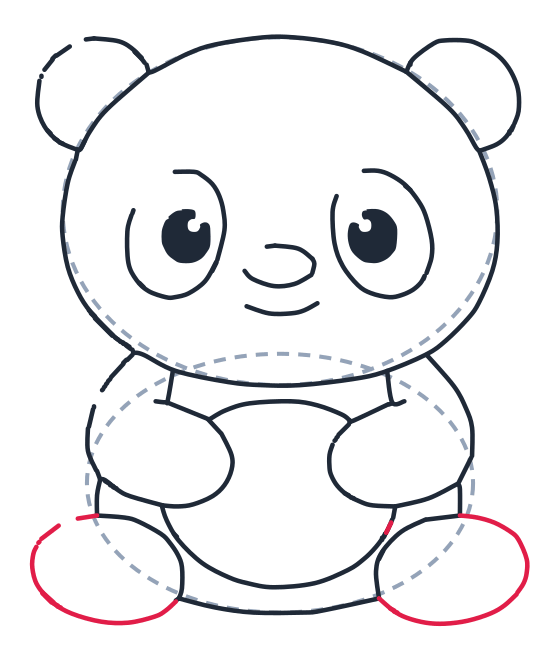
9 Step 9: Short legs
Add two wide ovals at the bottom for the feet.
What do you need to draw a panda?
A pencil, paper and an eraser, plus something black to colour with at the end, because a panda only becomes a panda when the black goes on. Every shape in the drawing is a circle, an oval or a soft curve, so a wobbly line does no harm at all.
Where do you start?
With the two grey guide shapes, sketched lightly and overlapping: a big circle for the head and a wide oval under it for the body. On this panda the head is bigger than the body, which is exactly what makes it look like a cub. The overlap matters. A panda has no neck to speak of, so the head sinks straight onto the shoulders; guides drawn with a gap between them give you a panda on stilts.
What is the hardest part of drawing a panda?
The eye patches, and the mistake is drawing them as two level circles. On this panda each patch is a big oval that leans in toward the nose, higher on the outside and lower in the middle, and the eye is a small circle sitting INSIDE its patch, not next to it. Draw the tilted patch first, then drop the eye into it, and the face reads as a panda before any black is added.
Second thing: the arms. They do not hang at the sides, they reach across the top of the belly. Draw the long curve across the belly first, then close each paw with a big C shape at the side, and the hug appears on its own.
How do you make it your own?
- Colour it right. Ears, eye patches, arms and legs black, head and belly white. That one rule is the whole panda uniform.
- Give it bamboo. A straight stalk resting across the paws, with a few narrow leaves at the top.
- Make it a cub. Bigger head, smaller body, and the eye patches drawn extra large.
- Turn it into its cousin. Colour it rusty orange with white cheeks and a ringed tail and you have a red panda instead.
What else is worth knowing about pandas?
The big belly you drew is honest: a wild panda spends ten to twelve hours a day eating bamboo, and it sits back exactly like this drawing while it chews. The hugging paws hide a secret too. A panda has an extra thumb, a wrist bone that grew long so it can grip a bamboo stalk, which is why it holds its food the way you hold a corn cob. And a newborn panda is pink, blind and about the size of a stick of butter, one of the smallest babies of any large animal.
Questions people ask about drawing a panda
Is this a good first animal for a 4 year old?
Yes. Nine short steps, every shape is a circle or a soft curve, and the two guide shapes do most of the work. Nothing has to be symmetrical.
How long does it take?
About eleven minutes the first time. The head circle and the body outline are the longest single lines; the face is fiddly rather than slow, because the patches, eyes, nose and smile are all small shapes close together.
How do I make it look like a panda and not a bear?
The patches do all the work. Tilt them toward the nose, keep the ears round and high, and colour the limbs black while the head and belly stay white. The same drawing with plain eyes and brown fur is just a bear.