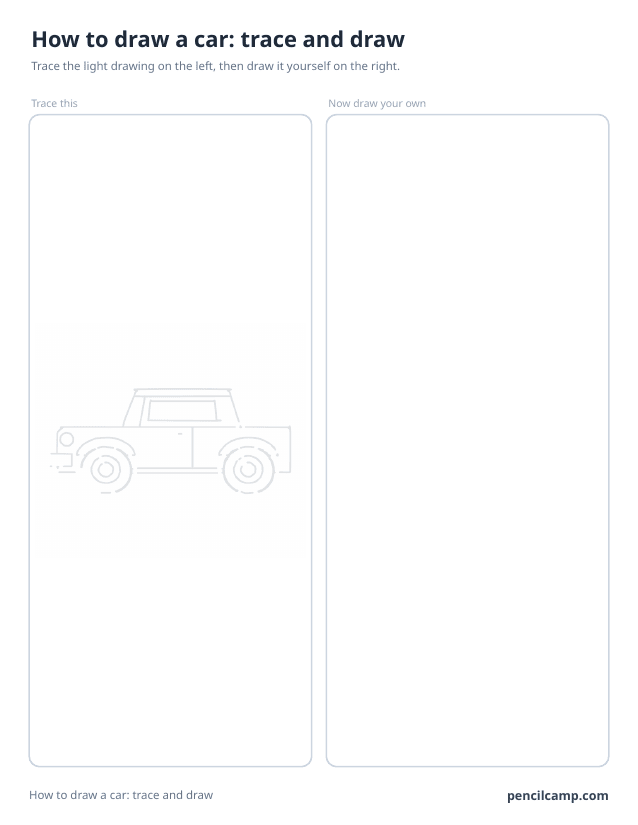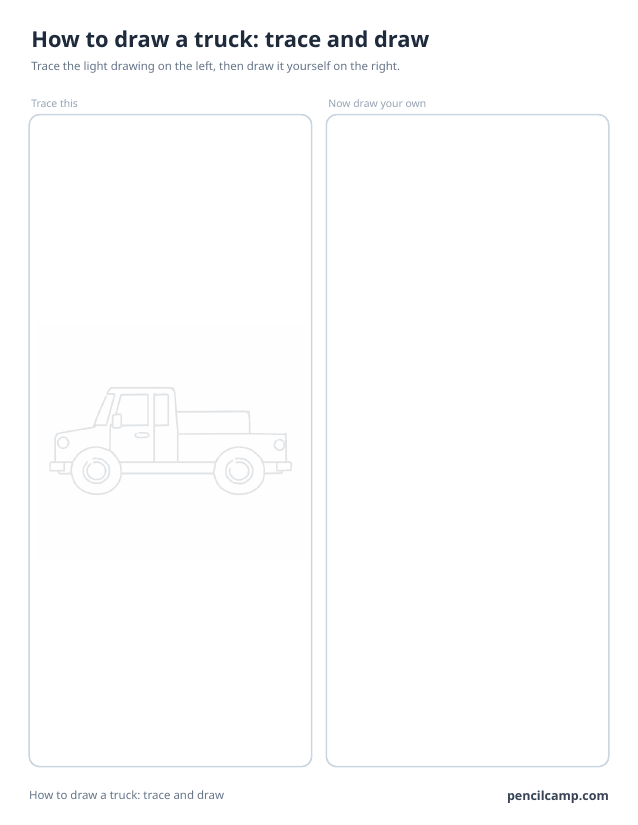
Drawing practice sheets

Tracing is the step between copying and drawing. The left half of each sheet carries the finished drawing printed very faintly, light enough to trace over with a pencil. The right half is empty, for the same drawing done without help.

What is on a drawing practice sheet?

A drawing practice sheet gives you the same picture twice: once printed faintly so you can trace it, and once as an empty box so you can draw it unaided. Tracing first builds the muscle memory that freehand drawing then tests.

Animals
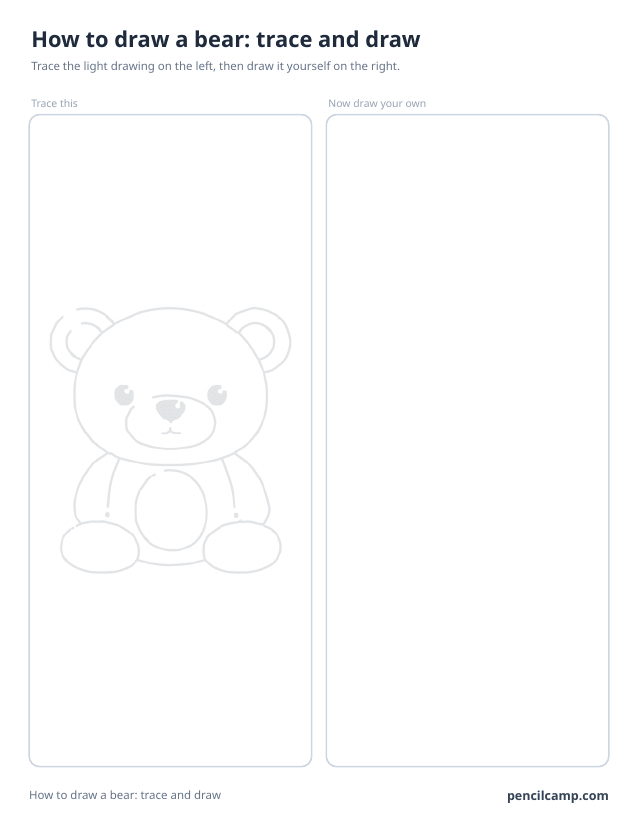
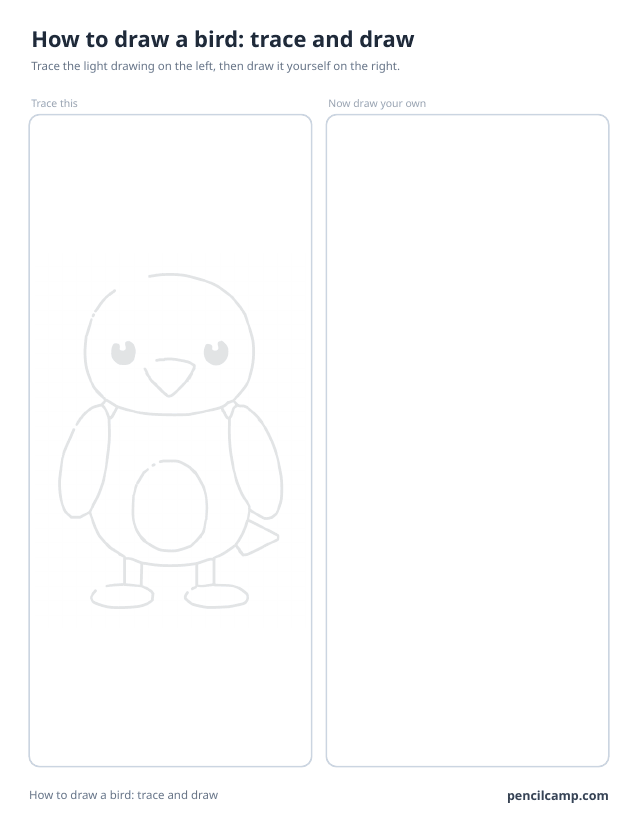
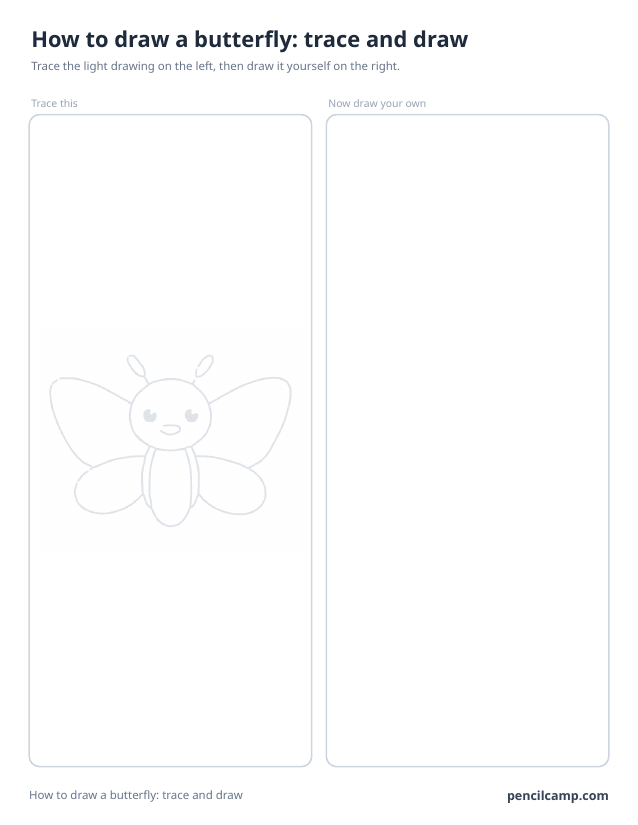
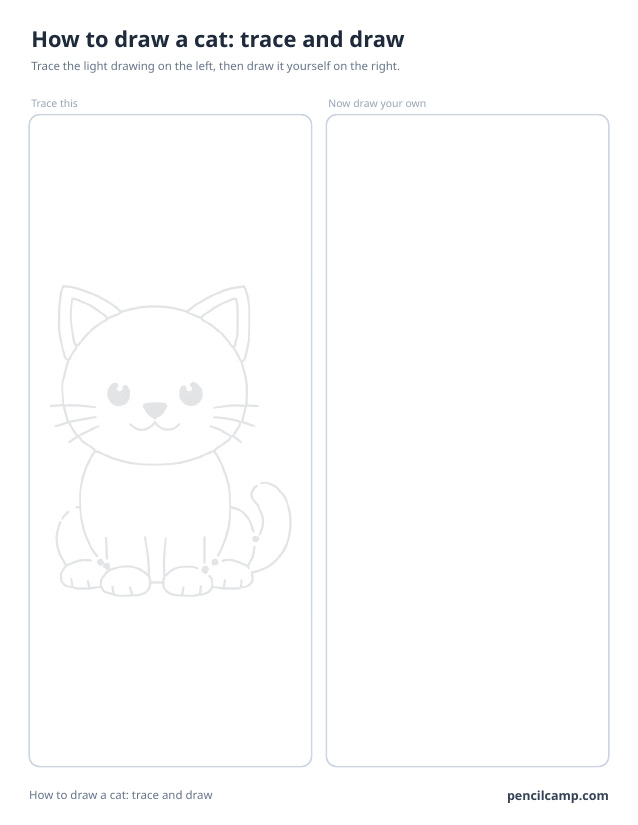
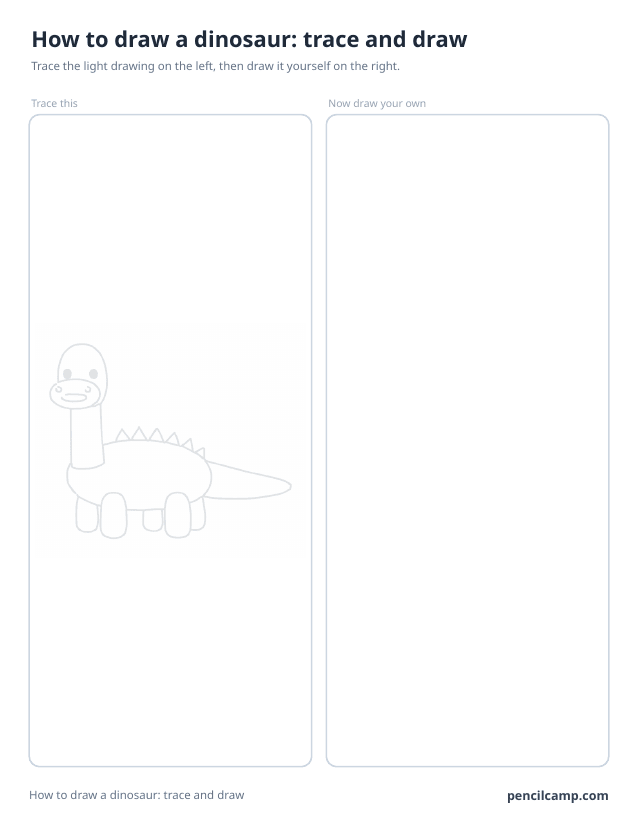
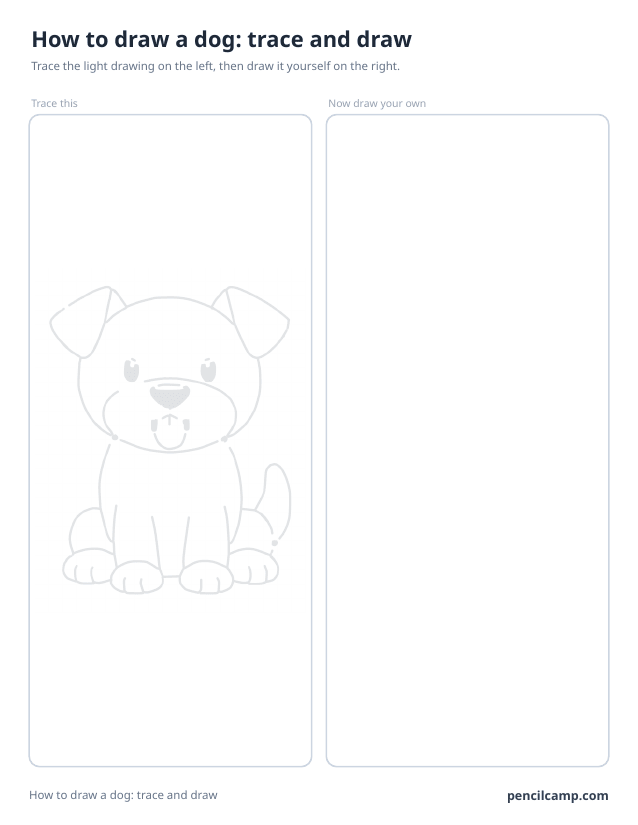
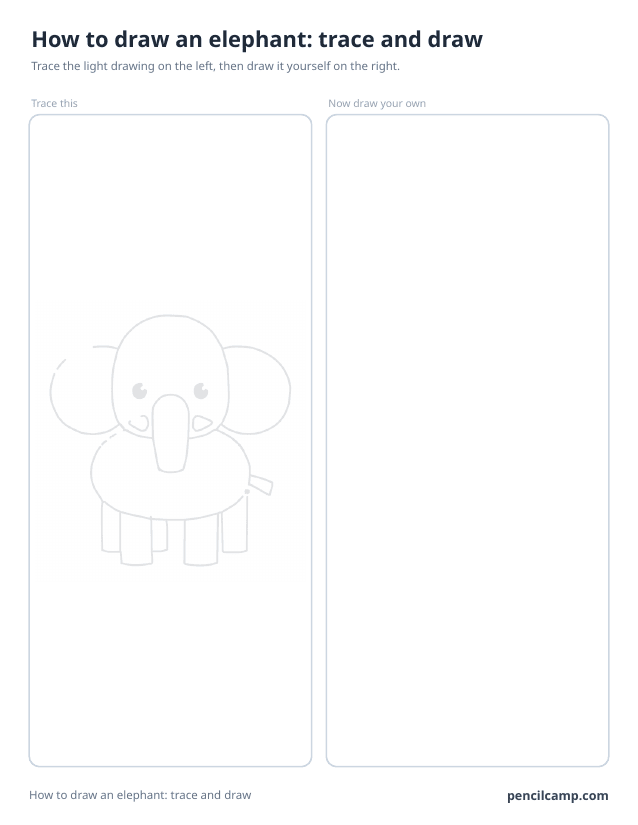
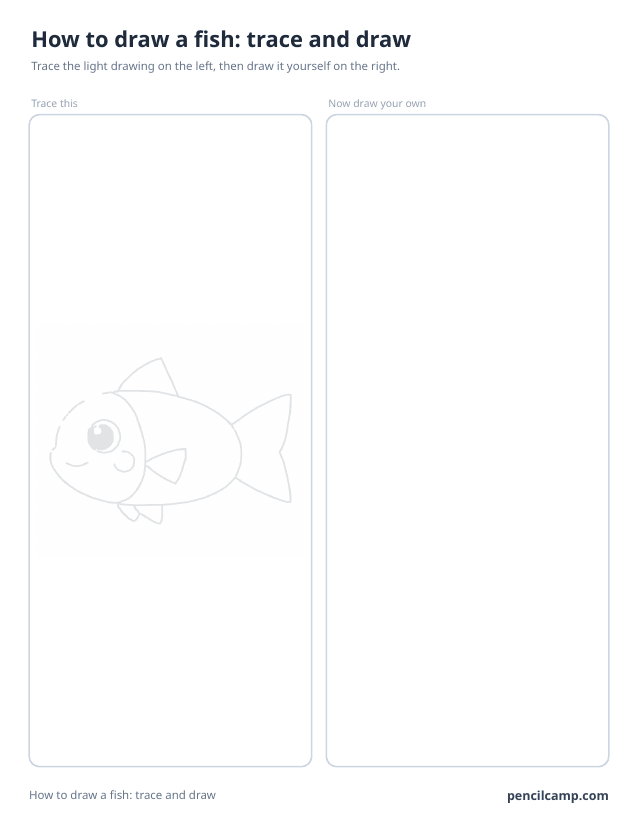
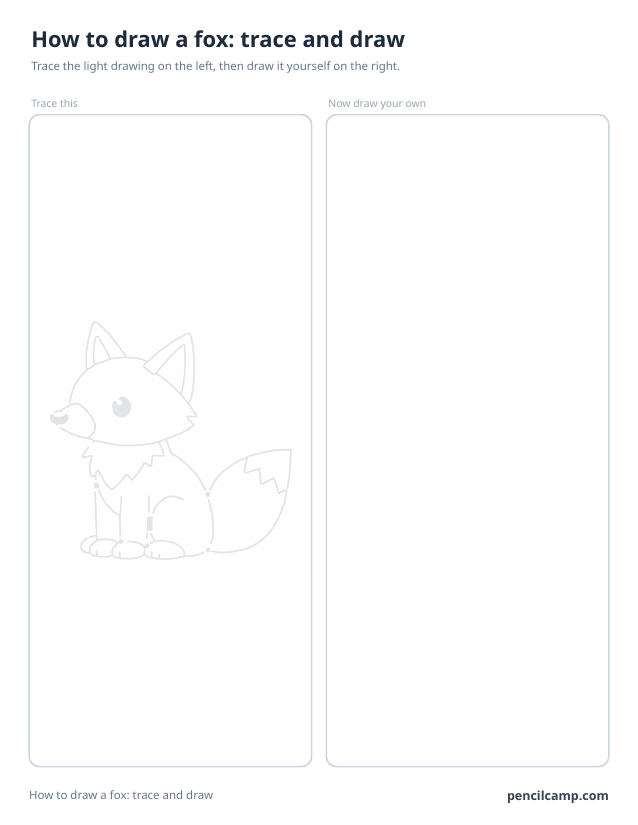
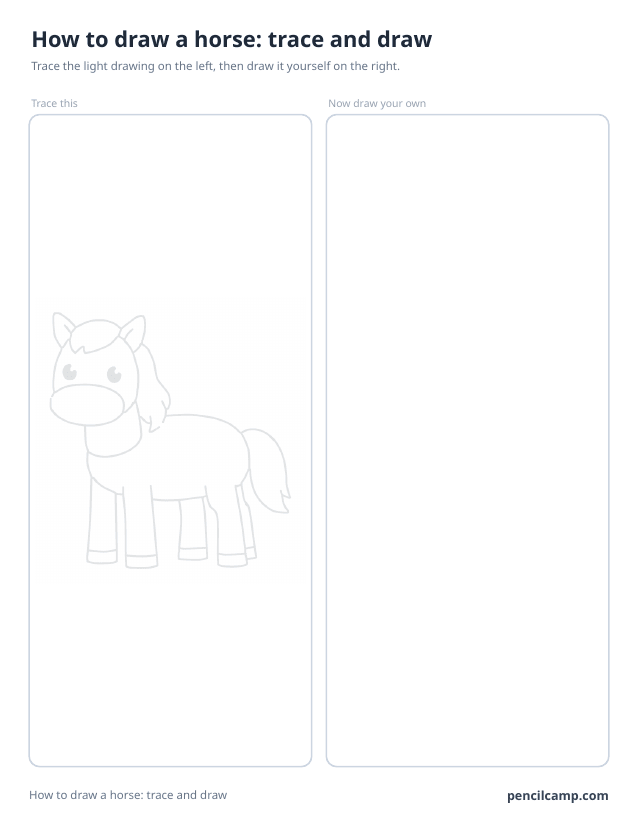
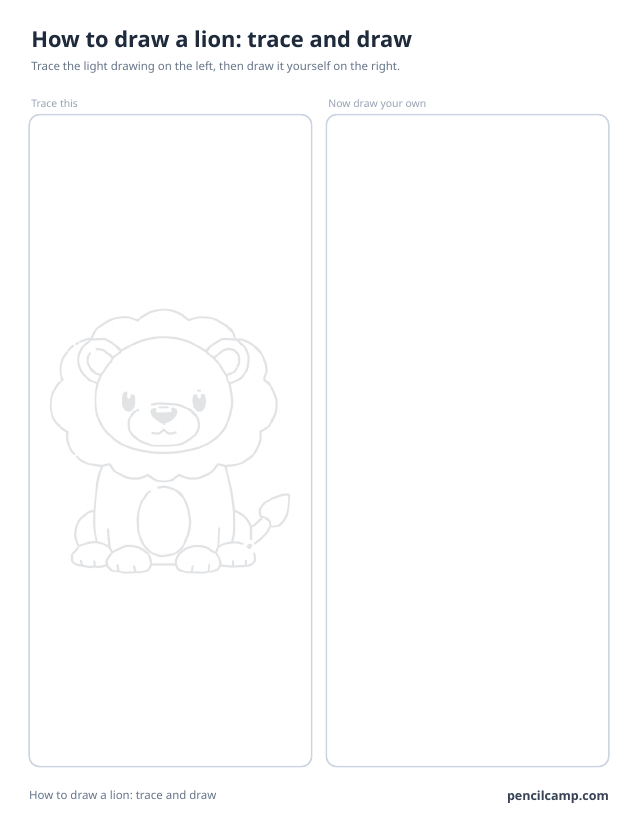
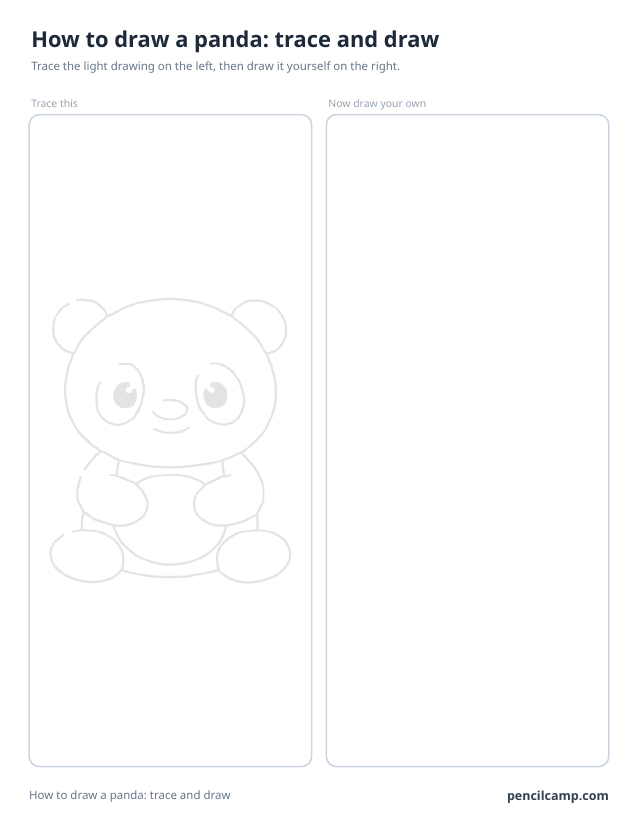
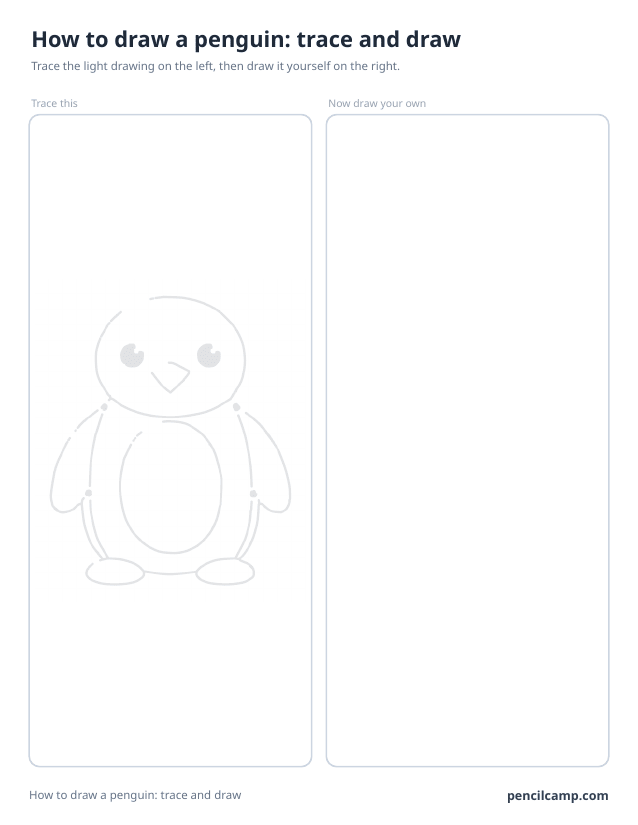
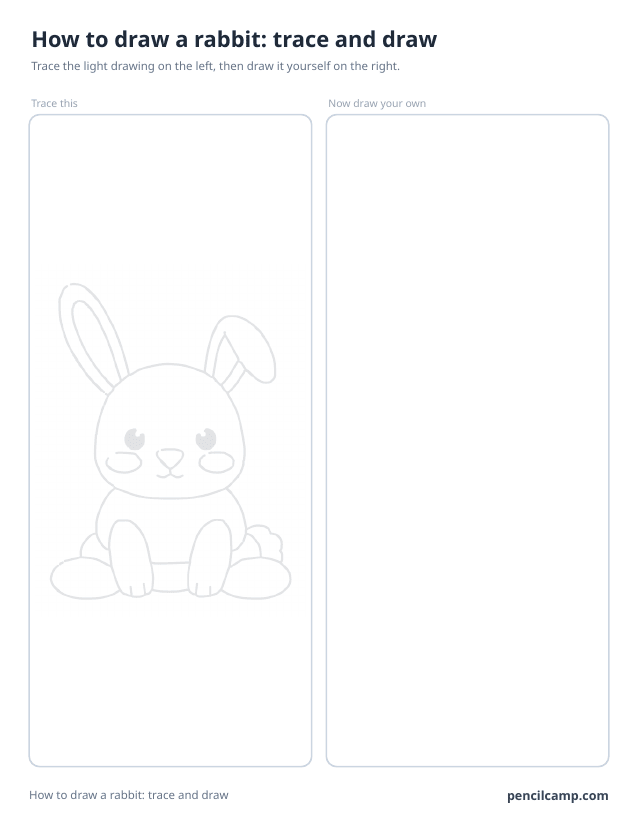
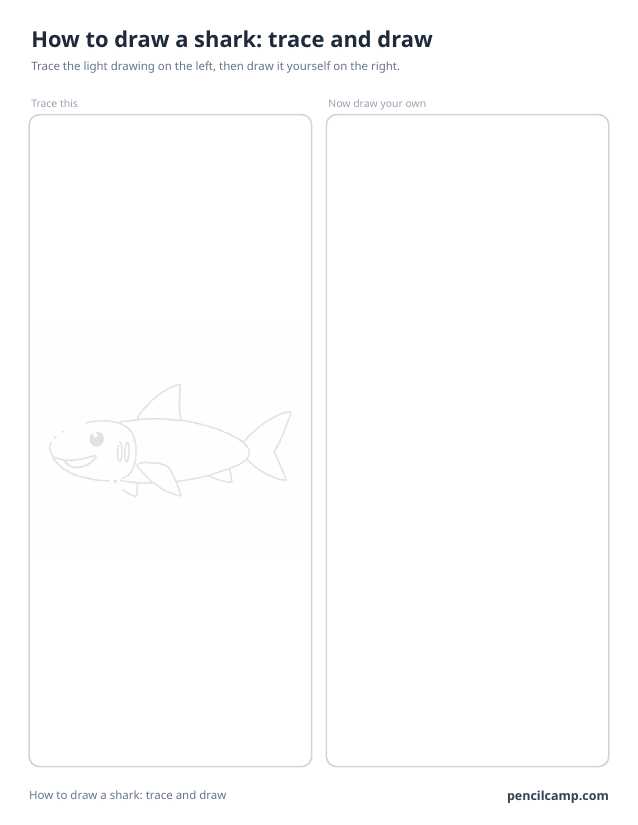
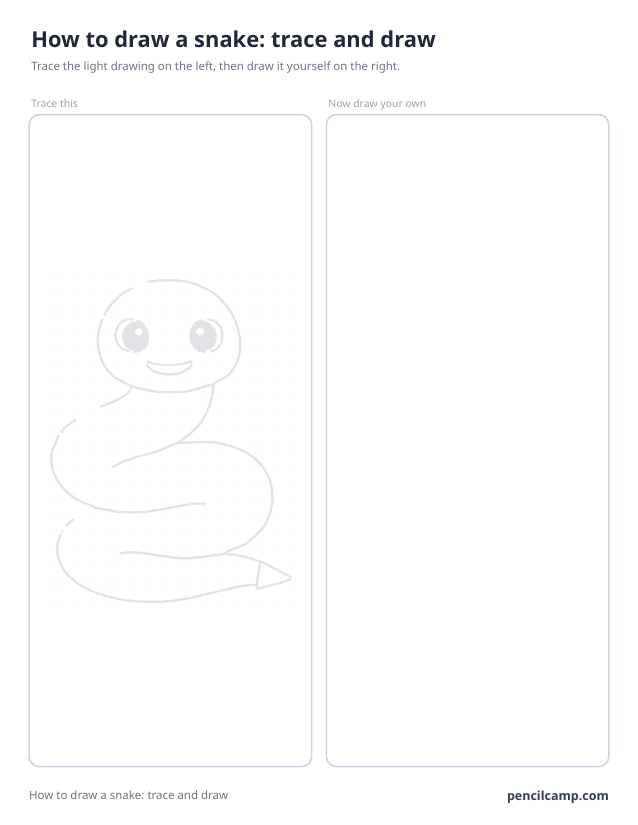
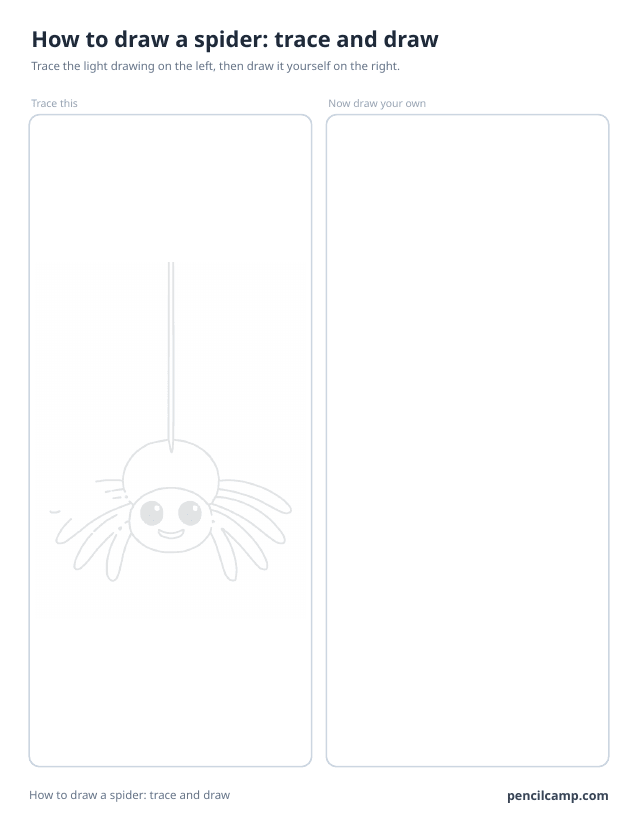
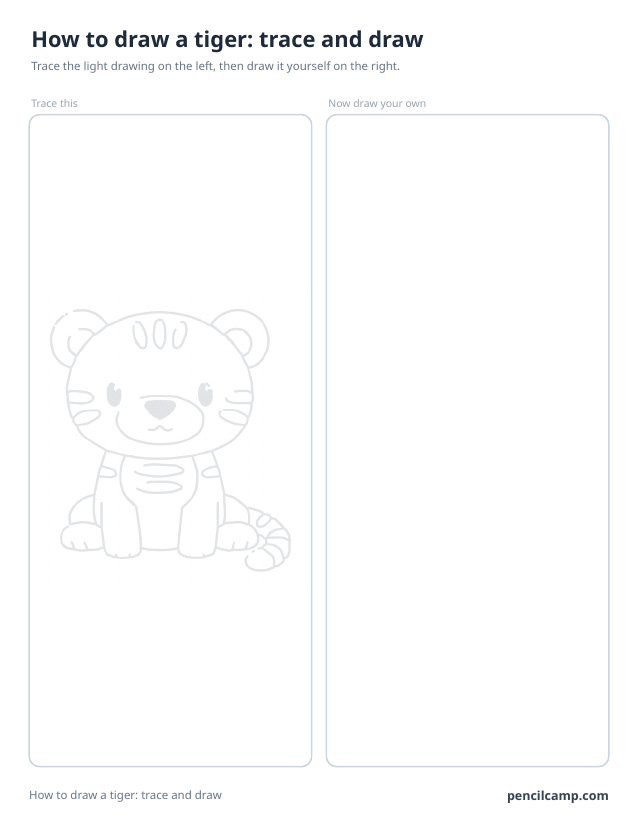
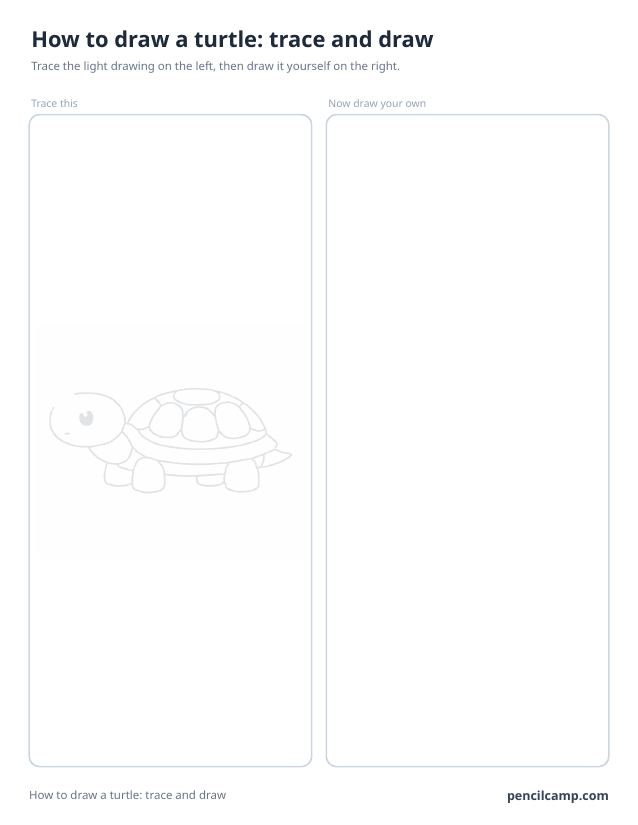
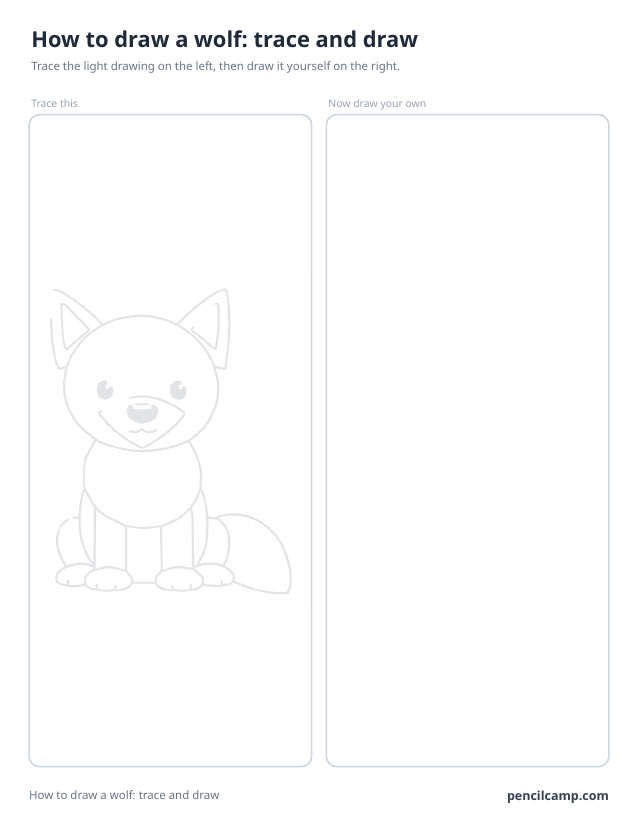
Trace and draw sheet: a teddy bear printed in faint grey on the left, an empty box of the same size on the right Bear Trace the teddy, ears to foot pads, then draw it again on the right without looking at the lines underneath. Download PDF Trace and draw sheet: a bird printed in faint grey on the left, an empty box of the same size on the right Bird The little bird is printed pale enough to show your pencil clearly. Trace the beak and wings, then try the whole bird free on the right. Download PDF Trace and draw sheet: a butterfly printed in faint grey on the left, an empty box of the same size on the right Butterfly A faint butterfly with four rounded wings. On the right side, see whether you can make the two halves match without the guide. Download PDF Trace and draw sheet: a sitting kitten printed in faint grey on the left, an empty box of the same size on the right Cat Go over the sitting kitten, whiskers and all, then draw your own next to it. The tail is the line most children leave out. Download PDF Trace and draw sheet: a long neck dinosaur printed in faint grey on the left, an empty box of the same size on the right Dinosaur Trace the long neck in one smooth stroke if you can. The spikes along the back are small triangles, easy to count and copy. Download PDF Trace and draw sheet: a sitting puppy printed in faint grey on the left, an empty box of the same size on the right Dog The puppy is faint on the left. Trace it, then draw it again on the right; the floppy ears are a good test of a steady curve. Download PDF Trace and draw sheet: an elephant printed in faint grey on the left, an empty box of the same size on the right Elephant Trace the big ears and the trunk, then draw the elephant again in the empty box. Keep the four legs the same width. Download PDF Trace and draw sheet: a fish printed in faint grey on the left, an empty box of the same size on the right Fish A light fish facing left. Its forked tail and the big round eye are the two parts worth tracing twice. Download PDF Trace and draw sheet: a sitting fox printed in faint grey on the left, an empty box of the same size on the right Fox The fox sits with its huge tail curled behind. Trace the zigzag fur on the chest and the tail tip, then draw it yourself. Download PDF Trace and draw sheet: a pony standing side on printed in faint grey on the left, an empty box of the same size on the right Horse A pony standing side on, printed faintly. The four legs are thin and close together, so trace them slowly before trying it alone. Download PDF Trace and draw sheet: a lion cub printed in faint grey on the left, an empty box of the same size on the right Lion Trace the lion cub and its round, bumpy mane. On the right, the mane is the part to draw first, then the face inside it. Download PDF Trace and draw sheet: a panda printed in faint grey on the left, an empty box of the same size on the right Panda A round panda with its arms around its tummy. Trace it, then shade the eye patches and ears on your own drawing. Download PDF Trace and draw sheet: a penguin printed in faint grey on the left, an empty box of the same size on the right Penguin A short, round penguin, quick to trace. Good for children who get tired before the end of a longer drawing. Download PDF Trace and draw sheet: a rabbit printed in faint grey on the left, an empty box of the same size on the right Rabbit Trace the long ears and round cheeks, then draw the bunny again on the right. Ears the same length on both sides are the challenge. Download PDF Trace and draw sheet: a shark printed in faint grey on the left, an empty box of the same size on the right Shark A smiling shark printed faintly. Trace the fin and the curved gill lines, then draw your own shark swimming the other way. Download PDF Trace and draw sheet: a coiled snake printed in faint grey on the left, an empty box of the same size on the right Snake One long curving body that never breaks. Tracing it trains a steady hand for curves before drawing the coils freehand. Download PDF Trace and draw sheet: a spider on a thread printed in faint grey on the left, an empty box of the same size on the right Spider A spider hanging from its thread. Trace all eight legs, then count them again in your own drawing on the right. Download PDF Trace and draw sheet: a tiger cub printed in faint grey on the left, an empty box of the same size on the right Tiger Trace the sitting tiger and every stripe. On the right, draw the body first and add the stripes only at the end. Download PDF Trace and draw sheet: a turtle printed in faint grey on the left, an empty box of the same size on the right Turtle Trace the turtle and the plates on its shell. On your own copy, you can invent a different shell pattern. Download PDF Trace and draw sheet: a sitting wolf printed in faint grey on the left, an empty box of the same size on the right Wolf Trace the sitting wolf, then draw it again. The pointed face and tall ears are what make it look like a wolf and not a dog. Download PDF

Buildings

Fantasy

Food
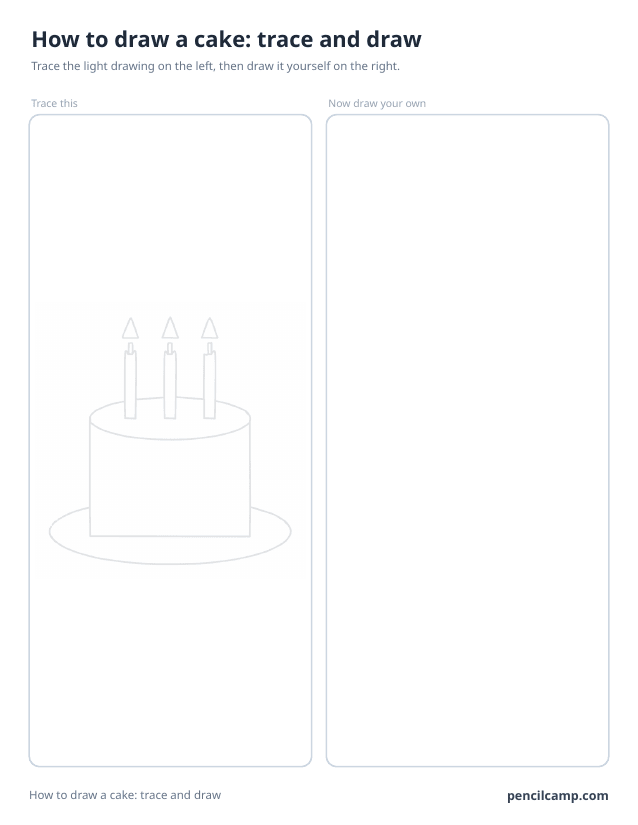
Lettering
Nature
Vehicles
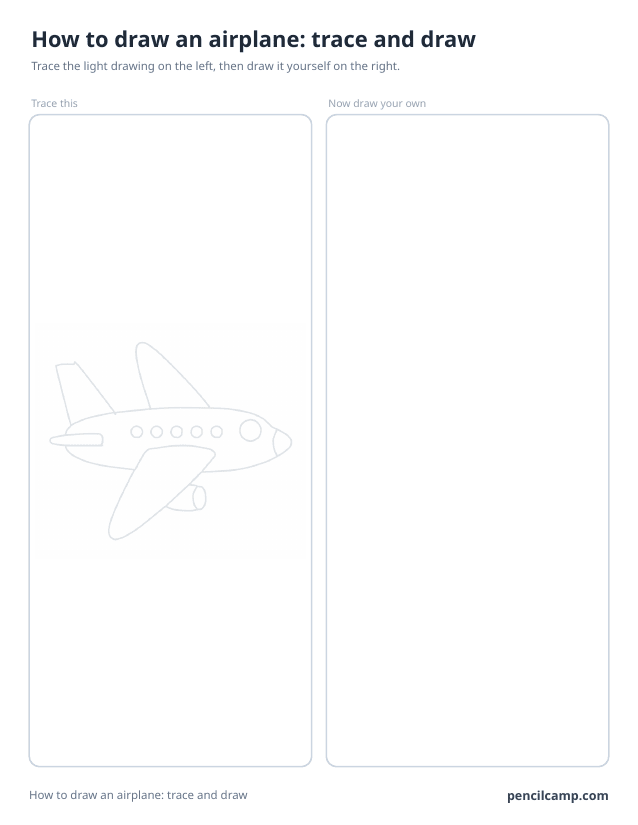
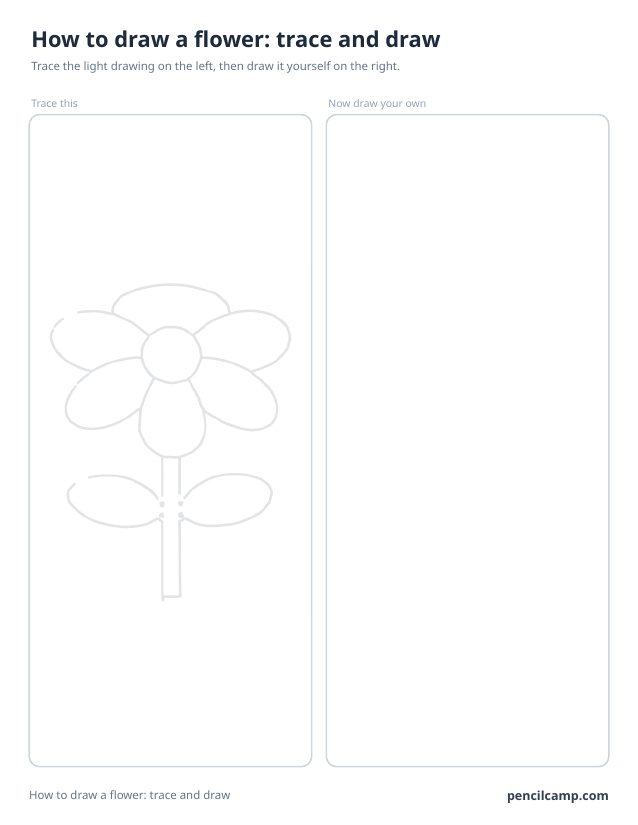
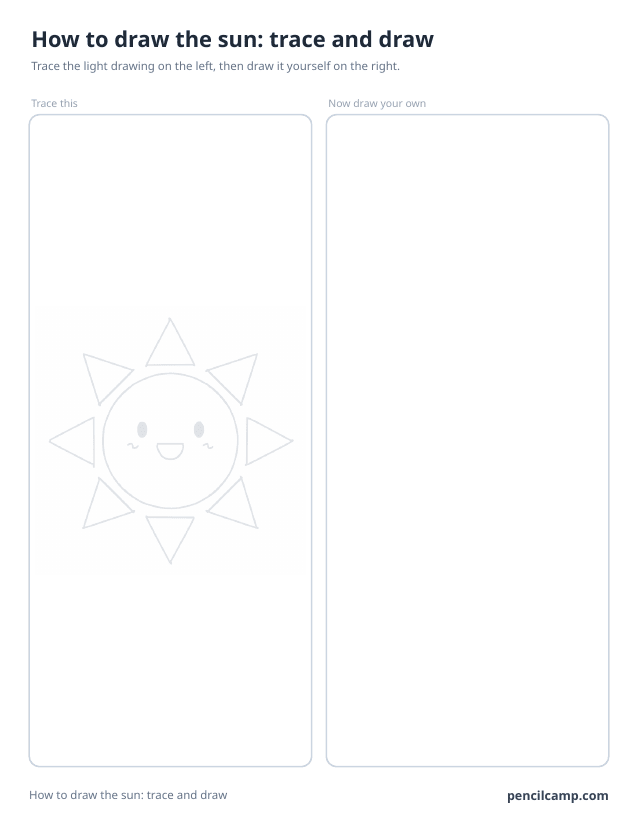
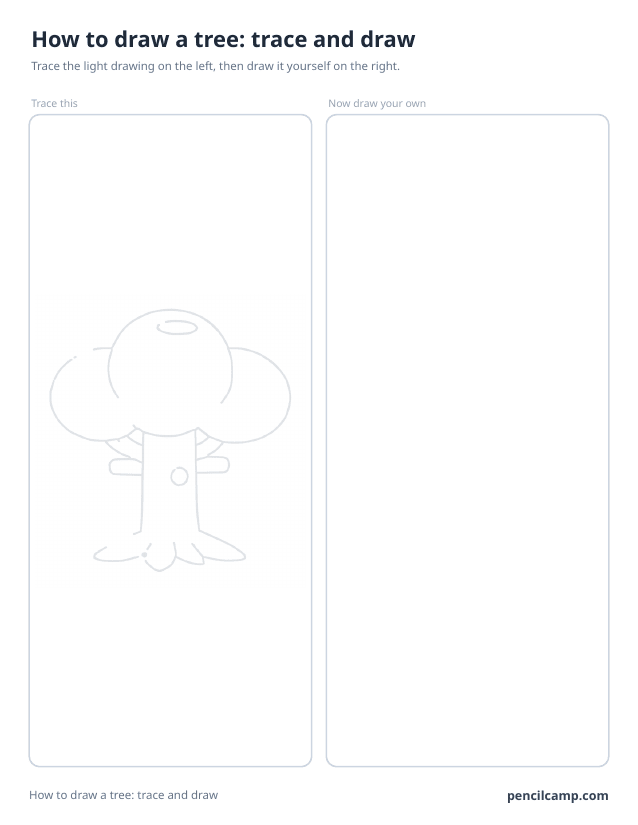
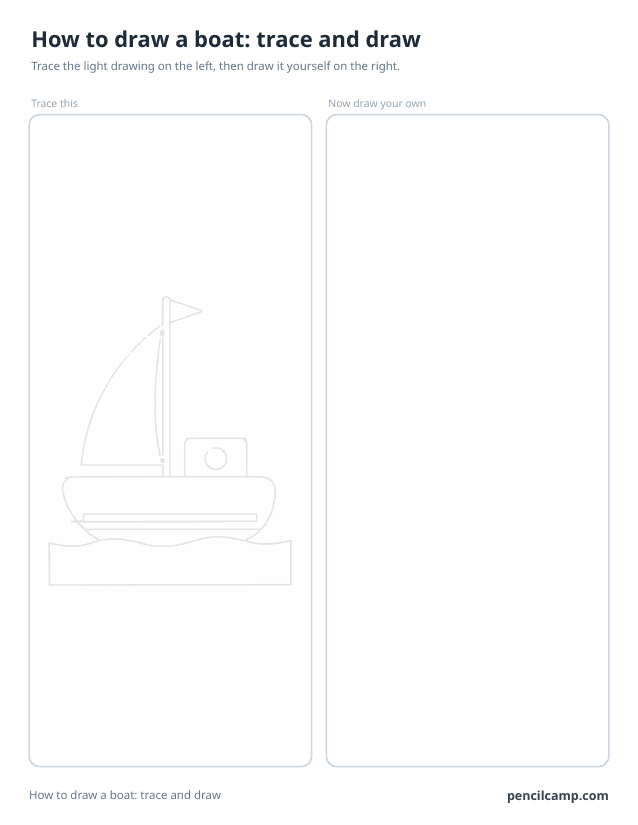
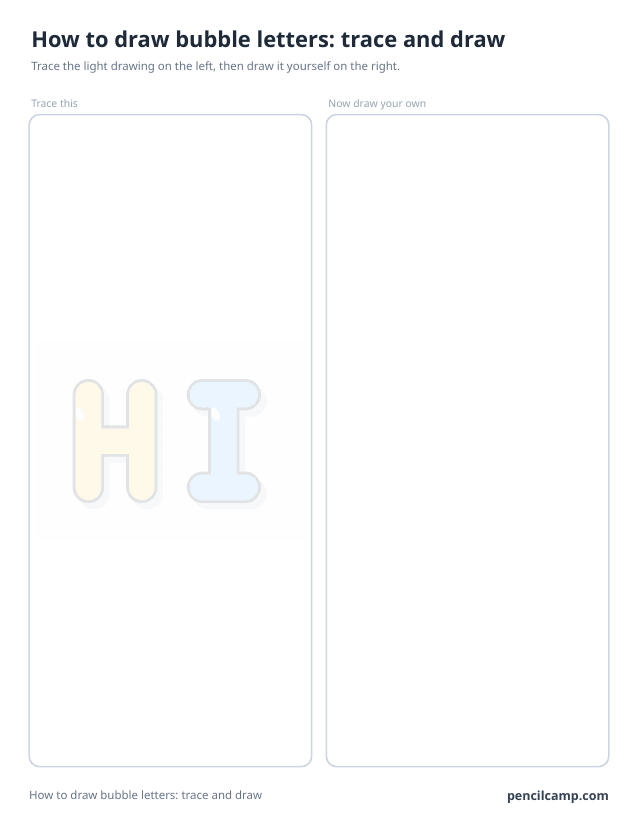
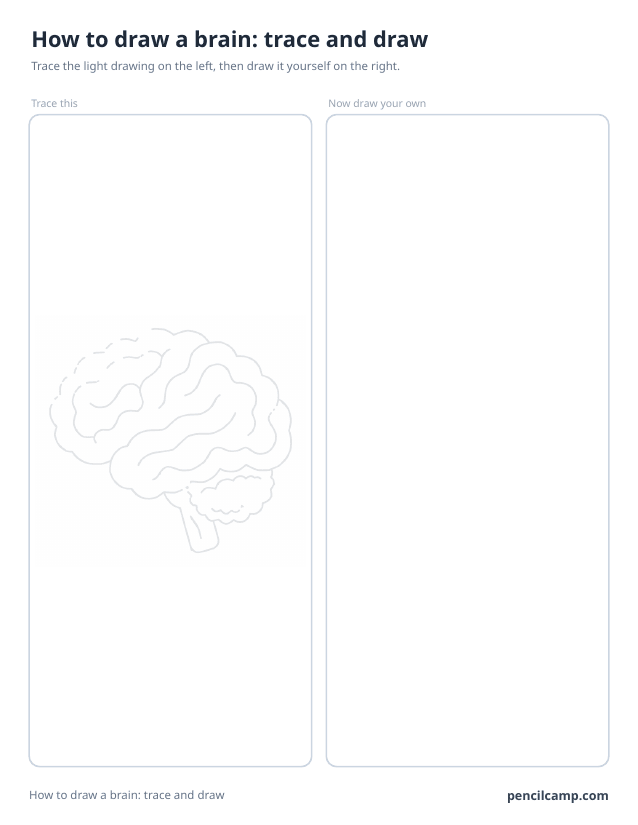
The page is split into two tall boxes. The left box holds the finished drawing at low opacity, pale enough that a pencil line shows clearly on top of it. The right box is empty and the same size, so the second drawing can be compared line for line with the first.

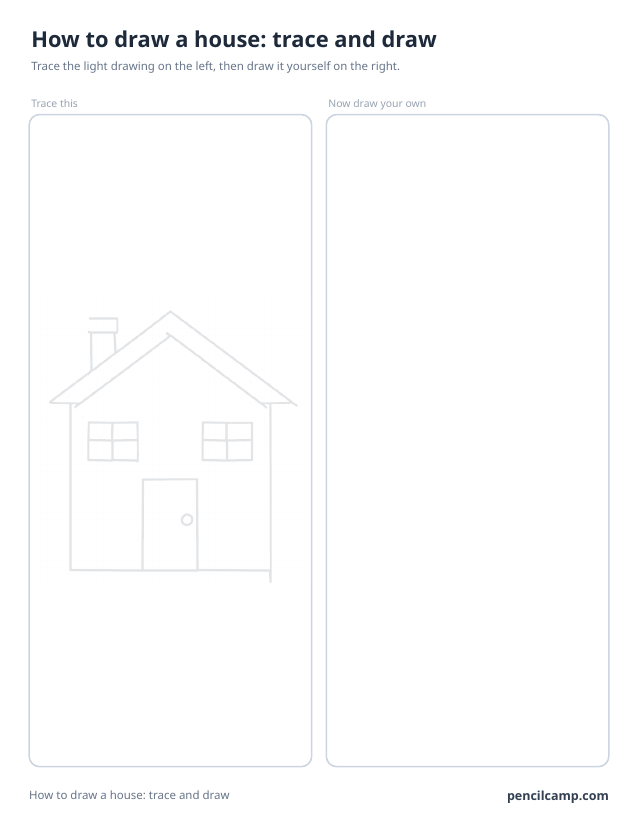
Tracing helps most with drawings that have long smooth curves: the snake, the brain, the dinosaur neck and the fish tail. It helps least with the house, which is straight lines that a ruler can do. With younger children, trace once, then turn the sheet over and draw from memory on the back before using the right hand box.

Light printer settings can make the faint drawing too pale. If the left side looks almost blank, print at normal or best quality rather than draft. A soft pencil, HB or 2B, shows up better on top of the grey than a hard one.

When tracing feels easy, move on to the finish the drawing sheets, where half the help is removed. The same 35 drawings appear on the step sheets if a child wants to see how one is built.

Other printable sets